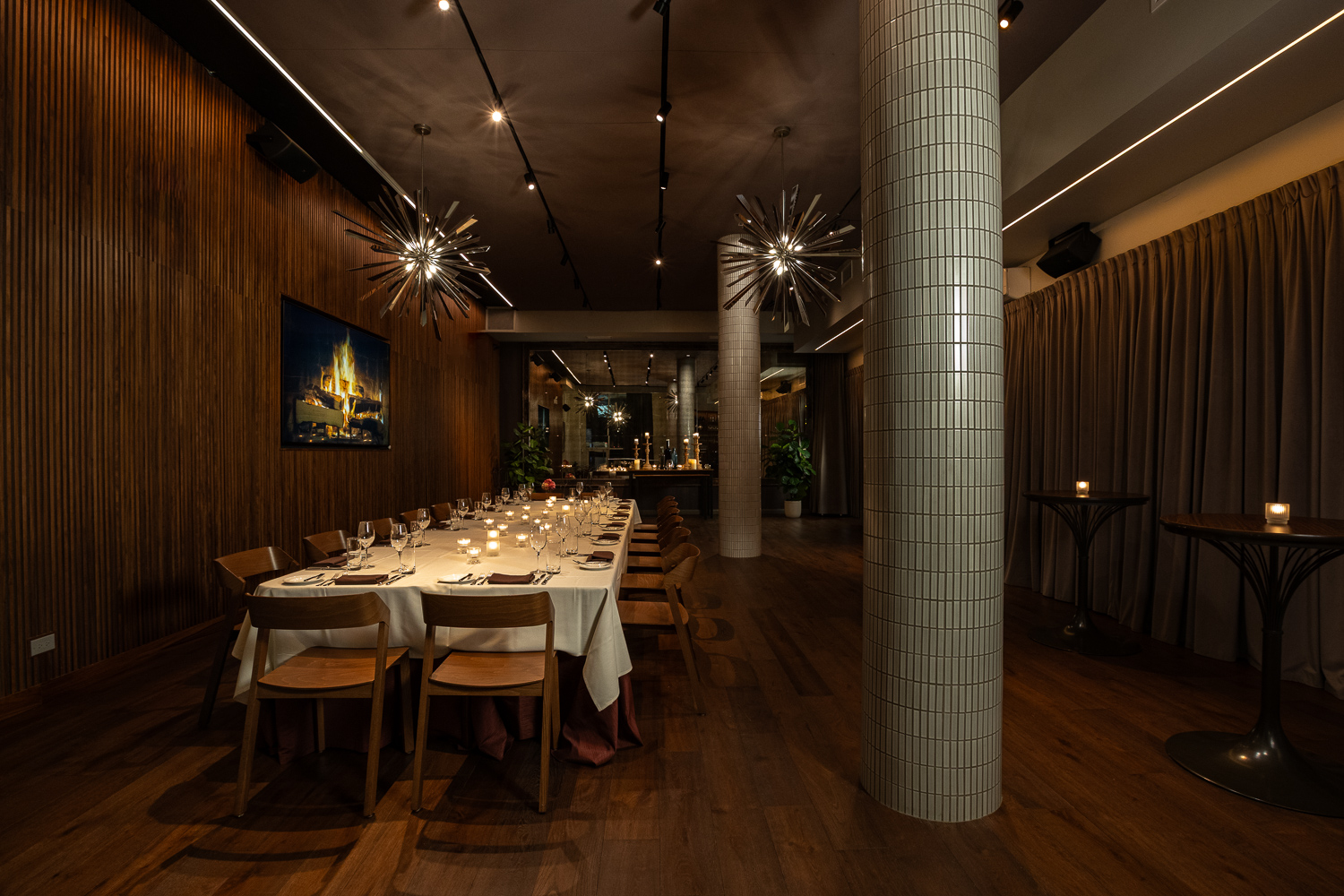
How Much Does It Cost to Rent a Restaurant for a Private Party?
Restaurant private party costs vary from $500 for small neighborhood spots to $15,000+ for upscale venues. Understanding pricing models helps you budget accurately.

How Much Does It Cost to Rent a Restaurant for a Private Party?
TL;DR: Restaurant buyout costs range from $500-$2,500 for neighborhood spots with 20-50 guests, $3,000-$8,000 for mid-tier restaurants seating 50-100, and $10,000-$15,000+ for upscale venues with 100+ guests. Most venues charge either a flat rental fee plus per-person minimums, or food-and-beverage minimums without separate room fees. Hidden costs include service charges (18-22%), sales tax, cake-cutting fees, and AV upgrades.
Quick Verdict: What You'll Actually Pay
If you're planning a 40-person dinner in a major city, expect to spend $3,500-$6,000 total (food, beverage, tax, service). Smaller gatherings of 15-20 people in neighborhood restaurants can run $1,200-$2,500. Corporate events for 75+ at upscale venues easily hit $10,000-$20,000.
The real cost depends less on the venue's "rental fee" and more on their minimum spend requirements and how much your group will actually eat and drink.
Restaurant Private Party Pricing Models
| Factor | Budget Venues | Mid-Tier Restaurants | Upscale/Premium |
|---|---|---|---|
| Venue types | Neighborhood bistros, casual dining | Contemporary American, ethnic fine dining | Steakhouses, rooftop venues, Michelin-rated |
| Guest capacity | 20-50 | 50-100 | 100-300+ |
| Base rental fee | $0-$500 (often waived) | $500-$2,000 | $2,000-$5,000+ |
| Food minimum (per person) | $30-$50 | $60-$100 | $100-$250+ |
| Beverage minimum | $15-$25/person or cash bar | $20-$40/person | $40-$100+/person |
| Service charge | 18-20% | 20-22% | 22-25% |
| Room fee structure | Usually waived if F&B minimum met | Separate fee or included in minimum | Often separate, non-negotiable |
| Deposit required | 25-50% | 50% | 50-100% |
| Cancellation policy | 7-14 days | 14-30 days | 30-60 days |
| AV/setup fees | $0-$200 | $200-$500 | $500-$2,000+ |
| Booking window | 2-8 weeks out | 1-3 months | 3-6+ months |
| Price flexibility | Moderate (off-peak discounts) | Some (weekday/daytime) | Limited (high demand) |
Understanding the Base Rental Fee
The "rental fee" is often the smallest part of your total cost, and many restaurants waive it entirely if you meet food and beverage minimums.
When venues do charge a rental fee, they're typically recovering the opportunity cost of closing the space to regular diners. A restaurant that usually seats 60 guests and averages $80 per cover on a Saturday night is giving up roughly $4,800 in potential revenue. Your rental fee compensates for that gap.
Some restaurants structure this as a flat "room fee" ($500-$2,000), while others build it into higher per-person minimums. A venue might offer "no room fee with $5,000 F&B minimum" or "$1,000 room fee with $3,500 F&B minimum." Do the math on both options.
High-demand venues in major metros rarely negotiate room fees. If a Manhattan steakhouse or San Francisco waterfront spot charges $3,000 to reserve their private room on a Friday night, that's likely firm. They'll rent it at full price or open it to walk-ins.
Food and Beverage Minimums: Where Real Costs Live
Most of your budget goes to food and beverage minimums, not rental fees. Restaurants set these based on their typical revenue for that day and time slot.
A neighborhood Italian restaurant might require $2,500 F&B minimum for their 40-seat private room on a weeknight. That's $62.50 per person if you have 40 guests, or $83 per person with 30 guests. If your group orders $2,200 in food and drinks, you'll still pay the $2,500 minimum.
Upscale venues structure this differently. Instead of a combined minimum, they might require $85 per person for food AND $35 per person for beverages as separate minimums. You can't reallocate unused food budget to drinks.
Weekend minimums run 30-50% higher than weekday rates at the same venue. That $2,500 Thursday minimum becomes $3,500-$4,000 on Saturday night. Some restaurants triple their minimums during peak season (December holiday parties, wedding season May-October).
Cash bars complicate minimum calculations. If guests pay for their own drinks, those purchases usually don't count toward your minimum. You'll need to spend the full amount on food and host bar.
Service Charges vs. Gratuity: The 20-25% Addition
Every restaurant adds a service charge to your final bill, typically 18-25% of the food and beverage total. This isn't optional.
Service charges cover the cost of dedicated servers, bartenders, and support staff for your event. Most venues include this in the contract, and it applies to your total F&B spend, not just the minimum.
If you spend $6,000 on food and drinks, expect an additional $1,200-$1,500 in service charges. Some high-end venues add both a service charge (20%) AND an administrative fee (3-5%) to cover event coordination.
Unlike tips, service charges aren't always distributed entirely to staff. Restaurants can legally use portions for back-of-house labor, supplies, or overhead. If you want to ensure servers are tipped, ask how the service charge is distributed. Many hosts add a small cash tip on top for exceptional service.
Don't confuse service charges with sales tax, which applies separately to both food/beverage AND the service charge in most states. Your $6,000 spend with 20% service charge becomes $7,200, then add 8-10% tax on that total.
Hidden Costs That Inflate Your Final Bill
Restaurant contracts bury fees that add 15-30% to your expected cost.
Cake-cutting fees run $2-$5 per person when you bring an outside dessert. For 50 guests, that's $100-$250 to slice and plate a cake you already purchased. Some venues charge flat fees ($150-$300) instead.
Corkage fees apply if you want to bring your own wine, typically $25-$50 per bottle. High-end restaurants either prohibit outside alcohol entirely or charge $75-$100 per bottle to discourage it.
AV upgrades get expensive fast. Basic microphone and projector packages start at $200-$500. If you need multiple screens, wireless mics, or a DJ setup, expect $1,000-$2,500. Venues often outsource AV to third-party vendors who charge premium rates.
Staffing additions kick in for complex service needs. Coat check attendants cost $150-$300 for the evening. Dedicated bartenders beyond the included ratio (usually 1 bartender per 50 guests) add $200-$400 per bartender. Valet parking runs $500-$1,500 depending on volume.
Overtime fees apply if your event runs past the contracted end time. Most contracts include 3-4 hours of service. Each additional hour costs $200-$500 in staff overtime and kitchen fees.
Menu customization sometimes carries upcharges. Swapping the standard chicken entrée for short ribs might add $8-$15 per person. Dietary accommodations (vegan, gluten-free, kosher) occasionally cost extra, though most restaurants include reasonable substitutions.
How Guest Count Affects Per-Person Pricing
Smaller groups pay more per person to meet venue minimums. Larger groups benefit from economies of scale.
A restaurant with a $3,000 minimum charges $100 per person for 30 guests, or $60 per person for 50 guests. If you're on the fence about final headcount, book for the lower number and add guests later if your contract allows.
Venues often have minimum guest requirements separate from spending minimums. A private dining room might accommodate 80 people but require at least 40 guests to book. Below that threshold, they won't open the space.
The "sweet spot" for value is typically 70-80% of the room's maximum capacity. A 60-person room works best with 45-50 guests. You'll meet minimums comfortably without cramming people in.
Family-style service costs less than plated meals for the same food. A $75 per person plated dinner might only be $55-$60 served family-style, because the restaurant uses fewer servers and simpler execution.
Buffets are cheaper still ($40-$60 per person) but most upscale venues won't offer them for private events. Buffets look less premium and create service bottlenecks in private dining rooms.
Location-Based Price Variations
Restaurant rental costs vary dramatically by metro area and neighborhood.
Major metros (NYC, SF, LA, Chicago, Boston, DC): Expect to pay 40-60% more than national averages. A mid-tier private dining room that costs $4,000 in Nashville runs $6,000-$7,000 in Manhattan. Upscale venues in these markets easily hit $20,000-$30,000 for 100-person events.
Secondary markets (Austin, Denver, Portland, Nashville, Raleigh): Prices trend 15-25% below major metros. You'll find excellent venues with $2,500-$5,000 minimums that would cost double in coastal cities.
Suburbs and smaller cities: Neighborhood restaurants often have no rental fees and $1,500-$3,000 minimums for 40-50 guests. Service charges may be lower (18% vs. 22%) and venues are more flexible on pricing.
Resort and destination areas: Premium pricing applies in Napa, Aspen, Charleston, Miami Beach, and similar high-tourism zones. Expect major-metro prices even in smaller communities.
Within a single city, neighborhood matters as much as overall market. A trendy restaurant in Manhattan's West Village or San Francisco's Mission costs 30-50% more than an equivalent venue in Brooklyn or Oakland.
Seasonal pricing affects warm-weather destinations. Miami and Scottsdale restaurants charge peak rates November-April and offer 20-30% discounts during summer months. The reverse applies in northern cities where summer is high season.
Day of Week and Time of Day Discounts
The same venue can cost half as much on Tuesday afternoon versus Saturday night.
Weekday lunch events (11am-2pm) offer the best value. Restaurants are rarely fully booked for lunch, so they're motivated to fill private rooms. A space with a $4,000 Saturday dinner minimum might be $1,800-$2,200 for Tuesday lunch.
Weekday evenings (Monday-Thursday) run 20-40% below weekend rates. If a venue charges $5,000 on Saturday, expect $3,000-$4,000 on Thursday.
Sunday availability and pricing vary by restaurant type. Brunch spots command weekend rates for 10am-2pm slots but drop to weekday pricing for Sunday dinner. Traditional dinner restaurants often have low Sunday minimums.
Afternoon events (2pm-5pm) occupy dead zones in restaurant schedules. Some venues offer "afternoon tea" or "cocktail reception" packages at 40-50% off evening rates. You'll typically get appetizers and drinks, not full dinner service.
Avoid Friday and Saturday nights if budget is tight. These are premium slots when restaurants could easily fill the space with regular diners. Some high-demand venues don't even offer Friday/Saturday privates, or only for full buyouts at 3x normal minimums.
Private Dining Room vs. Full Restaurant Buyout
Renting a semi-private area costs significantly less than a full buyout but comes with tradeoffs.
Private dining rooms (separate space within a restaurant) typically seat 20-60 guests with floor-to-ceiling walls and doors. You get privacy and dedicated service while the restaurant operates normally. Minimums run $2,000-$6,000 depending on venue tier and timing.
Semi-private areas (partial separation via curtains, partitions, or distance from other diners) seat 15-40 guests and cost 30-50% less than true private rooms. You'll hear noise from the main dining room and may share restrooms. Minimums are often $1,200-$3,000.
Full buyouts (entire restaurant exclusively for your group) require much higher minimums. A restaurant that seats 100 people and averages $15,000 in Friday dinner revenue won't close for less than $12,000-$18,000 minimum. Small restaurants (30-50 seats) in non-peak times might accept $4,000-$7,000 buyouts.
Buyouts make sense for groups of 80+ guests where a private room isn't large enough, or when you need complete privacy. They're also good for cocktail receptions where guests will circulate through multiple areas.
The hidden advantage of private rooms is fixed costs. Your minimum is set regardless of how many regular diners the restaurant serves that night. With buyouts, some venues adjust minimums based on their booking trends. A slow December might get you a deal; prime wedding season won't.
Beverage Packages and Bar Pricing Structures
How you handle drinks dramatically affects final costs.
Host bar (open bar) means you pay for all guest drinks. Most venues require a beverage minimum ($25-$50 per person) with host bars. Consumption-based pricing is common: you pay actual bar tab plus 20-25% service charge. If guests order $1,800 in drinks, you pay $1,800 plus service.
Beverage packages provide unlimited beer, wine, and sometimes liquor for a fixed per-person price ($35-$75). These control costs but often include only house brands. Premium packages with name-brand spirits run $60-$100 per person.
Cash bars shift drink costs to guests but rarely save money. Venues still require food minimums, and many increase those minimums for cash bar events. A $3,500 host bar minimum might become a $3,000 food minimum plus cash bar.
Limited host bar offers one or two drink tickets per guest, then switches to cash. This hybrid keeps costs predictable while offering hospitality. Budget $8-$15 per drink depending on market.
Wine pairings cost $25-$75 per person for curated selections matched to each course. High-end restaurants push pairings as the premium option, and they do elevate the experience. For wine-focused groups, pairings offer better value than open bar.
Corkage policies matter if you're a wine enthusiast. Some restaurants allow you to bring special bottles for $25-$50 per bottle corkage. This works well for milestone celebrations where you want specific vintages.
Menu Pricing: Prix Fixe vs. À La Carte
Most restaurants offer prix fixe menus for private events rather than full à la carte ordering.
Prix fixe menus present 2-4 pre-selected courses at a set per-person price ($55-$150). Guests might choose from 2-3 options per course. This simplifies kitchen execution and controls costs. You'll typically see appetizer, entrée, and dessert for $65-$85 per person at mid-tier restaurants.
Chef's tasting menus showcase the restaurant's best dishes across 4-7 courses for $95-$200+ per person. These are popular at upscale venues and work well for food-focused celebrations. Beverage pairings add $45-$100 per person.
Family-style menus bring large platters to each table for sharing. This creates a more communal vibe and costs 15-25% less than plated service. Expect $45-$75 per person depending on venue tier.
Reception packages for cocktail parties include passed hors d'oeuvres and stationed displays for $40-$80 per person. Calculate 8-12 pieces per person for cocktail-only events, or 4-6 pieces if dinner follows.
Buffet options are rare at quality restaurants but available at some venues for $35-$60 per person. Most private dining rooms lack space for buffet setups.
À la carte ordering for private groups is unusual. Restaurants prefer standardized menus to manage kitchen flow. If you insist on à la carte, expect the venue to calculate an estimated per-person spend and set that as your minimum.
Deposits, Cancellation Policies, and Payment Terms
Restaurants require 25-50% non-refundable deposits to secure your date, with the balance due 3-7 days before the event.
Standard payment schedules work like this:
- At booking: 50% deposit (sometimes non-refundable, sometimes refundable until cancellation deadline)
- 10-14 days before event: Guaranteed guest count (usually 90-95% of estimated count)
- 3-7 days before event: Remaining balance based on guaranteed count
- After event: Final reconciliation for actual consumption (bar overages, additional guests)
Cancellation policies vary by venue and booking lead time:
- 30+ days notice: Often full refund minus small administrative fee
- 14-30 days notice: Typically forfeit 50% of total estimated cost
- 7-14 days notice: Forfeit 75-100% of estimated cost
- Less than 7 days: Almost always forfeit full amount
High-demand dates (New Year's Eve, graduation weekends, December holiday season) have stricter policies. Some venues require full payment 30 days in advance with no refunds.
Guest count adjustments have deadlines too. Most contracts let you reduce headcount by up to 10% until 5-7 days before the event. After that, you pay for the guaranteed count even if fewer people attend. You can usually increase headcount until 48-72 hours out, space permitting.
Payment methods matter. Many restaurants accept credit cards but add 3-4% processing fees for large events. Check or ACH transfer avoids fees. Corporate clients sometimes negotiate net-30 payment terms.
Using Marketplaces Like Venue Connect
Searching for restaurants manually means dozens of phone calls, email threads, and scattered pricing information. Modern marketplace platforms centralize this process.
Venue Connect combines AI-powered venue discovery with full event management tools. You describe your event in natural language ("Italian restaurant for 40 people in Austin under $4,000"), and the platform surfaces relevant venues with transparent pricing.
The inquiry-to-booking flow happens entirely within the platform's chat interface. You message venues, compare proposals, and negotiate details without juggling email chains. Contracts, BEO (Banquet Event Order) documents, and invoicing are built into the system.
For planners managing multiple events, Venue Connect offers serious workflow benefits. The BEO builder structures all event details (timeline, menu, setup requirements) in a standardized format that restaurants understand. The AI menu scanner lets you upload a restaurant's menu PDF or photo, and it auto-extracts items into a structured format.
The platform's pricing transparency is the real advantage. Instead of calling 15 restaurants to ask "what's your private dining minimum," you see baseline pricing before you even inquire. This saves hours of research time.
Venue Connect charges restaurants subscription fees, not per-booking commissions. For planners and guests, it's free to search and inquire. This aligns incentives better than commission-based platforms where the marketplace benefits from higher prices.
Host-side features include payout management, tax reporting, multi-venue dashboards (for restaurant groups), and analytics on booking conversion rates. These tools are overkill if you're planning a single birthday party, but invaluable for professional planners or hospitality operators.
Negotiating Restaurant Rental Costs
Everything is negotiable except at the highest-demand venues. Here's what actually works.
Book off-peak dates. Tuesday-Thursday events and lunch slots give you the most leverage. Ask directly: "What's your weekday rate for this same setup?" You'll often save 30-40%.
Commit to higher guest counts. If a venue quotes $4,000 for 40 people, ask what they'd charge for 50 guaranteed guests. They might drop the per-person rate to make the math work.
Offer flexibility on timing. "We can do any Thursday in March" gives the restaurant options to fill a slow week. They're more likely to discount when they control date selection.
Bundle multiple events. Corporate clients planning quarterly events or wedding planners booking multiple rehearsal dinners get better rates. A restaurant might offer 15% off if you commit to three events.
Reduce service complexity. Accept the standard menu instead of requesting customization. Choose family-style over plated. Skip AV rentals. Each simplification makes the event less costly for the restaurant, which they might pass along as savings.
Ask about waived fees. Room fees and cake-cutting charges are often negotiable. "Would you waive the room fee if we increase the F&B minimum to $4,500?" converts a hard cost into spend you'd probably hit anyway.
Consider non-traditional spaces. New restaurants building their private dining business offer deals to attract reviews and referrals. Ask if they have opening promotions.
What doesn't work: Asking for discounts at prime-time slots at popular venues. A Saturday night reservation at a hot restaurant in a major metro has zero flexibility. They'll rent it at full price.
When It Makes Sense to Spend More
Cheap restaurant rentals sometimes cost more in headaches than premium venues cost in dollars.
If your event has complex AV needs (presentations, video tributes, live music), pay for a venue with built-in equipment and experienced staff. Troubleshooting technical problems during your event ruins the experience.
For milestone celebrations (50th birthdays, anniversaries, retirement parties), the venue quality matters more than saving $1,000. Guests remember exceptional food and service decades later. They don't remember that you negotiated a discount.
Corporate events benefit from polished venues that reflect well on your organization. Bringing clients or executives to a budget restaurant saves money but signals wrong priorities.
Wedding-adjacent events (rehearsal dinners, morning-after brunches) should match the overall wedding vibe. If you're spending $70,000 on the wedding, a $3,000 rehearsal dinner at a nice restaurant makes sense.
Large events (100+ guests) are worth professional coordination. Pay the premium for venues with experienced event staff who can handle complex logistics. The alternative is stress and mistakes.
Dietary restrictions and allergies are easier to manage at higher-end restaurants. If you have multiple vegan, gluten-free, and kosher guests, a skilled kitchen handles this smoothly. Budget venues struggle with customization.
Red Flags in Restaurant Rental Contracts
Watch for these contract provisions that inflate costs or create problems.
Automatic gratuity increases. Some contracts state "18% service charge, subject to increase." That "increase" often happens, especially if you're booking far in advance. Lock in the specific percentage.
Uncapped beverage pricing. "Open bar charged at consumption" without per-person limits can spiral. Insist on either a beverage package or a maximum bar tab cap.
Vague minimums. "Approximately $5,000 F&B minimum" isn't acceptable. Get the exact number in writing.
Mandatory vendor requirements. Some venues force you to use their preferred (expensive) vendors for florals, AV, or photography. Ask about outside vendor policies upfront.
Service charge on rentals. Watch for contracts that apply the 20% service charge to room fees and equipment rentals, not just food and beverage. Service charges should apply only to F&B.
No attrition protection. If your guest count drops, you'll pay the guaranteed minimum. Make sure the contract allows at least 10% reduction until 7 days before the event.
Unclear overtime rates. "Additional hours charged at prevailing rates" could mean anything. Get overtime fees specified: "$300 per hour for each hour beyond contracted time."
Exclusive cake policies. Some restaurants require you to order dessert from them (at $8-$12 per person) AND charge cake-cutting fees if you bring an outside cake. Pick one or the other.
Hidden administrative fees. A 3-5% "event coordination fee" or "administrative charge" on top of service charges is common but should be disclosed upfront.
Sample Cost Breakdowns by Event Type
Here's what real events actually cost, broken down by category.
40-person birthday dinner, mid-tier restaurant, Saturday night (Denver):
- Room fee: $800
- Food (prix fixe): $70 × 40 = $2,800
- Beverage package: $45 × 40 = $1,800
- Service charge (20%): $920
- Sales tax (7.8%): $426
- Cake-cutting fee: $120
- Total: $6,866 ($172 per person)
75-person corporate dinner, upscale steakhouse, Thursday (Chicago):
- Room fee: $1,500
- Food (3-course plated): $95 × 75 = $7,125
- Wine pairing: $50 × 75 = $3,750
- Service charge (22%): $2,392
- Sales tax (10.25%): $1,399
- AV package (projector, screen, mics): $650
- Total: $16,816 ($224 per person)
25-person rehearsal dinner, neighborhood Italian, Friday (Portland):
- Room fee: waived
- Food (family-style): $55 × 25 = $1,375
- Bar tab (actual consumption): $687
- Service charge (18%): $371
- Sales tax (0% Oregon): $0
- Total: $2,433 ($97 per person)
120-person full buyout, trendy restaurant, Saturday (Brooklyn):
- Buyout fee: $3,000
- Food minimum (buffet-style): $65 × 120 = $7,800
- Host bar: $4,200
- Service charge (20%): $2,400
- Sales tax (8.875%): $1,243
- DJ and sound system: $1,200
- Coat check: $250
- Total: $20,093 ($167 per person)
Frequently Asked Questions
What's the cheapest way to rent a restaurant for a party?
Book a weekday lunch event at a neighborhood restaurant in a non-premium area. Tuesday or Wednesday 11am-2pm slots often have no room fees and minimums as low as $1,200-$2,000 for 30-40 guests. Choose family-style service over plated, and consider limited bar options (wine and beer only, or drink tickets) instead of open bar. Small restaurants in suburbs consistently cost 40-60% less than urban counterparts.
Do all restaurants charge service charges on top of the food cost?
Yes, virtually all restaurants add 18-25% service charges to private event bills. This isn't a tip—it's a mandatory fee covering dedicated staff for your event. The service charge applies to your total food and beverage spend, and then sales tax applies to both the F&B and the service charge. Budget for your actual spend to be 30-35% higher than the menu prices suggest.
Can I bring my own alcohol to reduce costs?
Most upscale restaurants prohibit outside alcohol entirely. Mid-tier and casual restaurants sometimes allow wine only, charging $25-$50 per bottle corkage fees. Even when permitted, you'll still need to meet food minimums, which may increase to compensate for lost beverage revenue. Bringing your own alcohol rarely saves meaningful money unless you have access to wholesale pricing or rare wines you specifically want to serve.
How far in advance should I book a restaurant for a private party?
Book 2-3 months ahead for weeknight events at most restaurants, 3-6 months for weekend slots at popular venues. High-demand dates (December holidays, graduation weekends, New Year's Eve) require 6-12 months lead time. Brand-new hot restaurants may need even more notice. Last-minute bookings (2-4 weeks out) are possible for weekday lunch or Sunday evening slots, especially at neighborhood spots.
What happens if fewer guests attend than I guaranteed?
You pay for the guaranteed guest count regardless of actual attendance. If you guaranteed 50 guests at $80 per person but only 42 attend, you still owe for 50. Most contracts let you reduce headcount by 10% until 5-7 days before the event. After that deadline, the guaranteed count is locked. Communicate openly with the restaurant if your numbers drop—some will work with you on reasonable reductions rather than enforce strict minimums.
Final Verdict: Budget Realistically and Book Early
Restaurant private party costs extend well beyond the sticker price you see on initial quotes.
For accurate budgeting, take the per-person food cost, add $25-$50 per person for beverages, then multiply by 1.3 to account for service charges and tax. Add any room fees and a $500-$1,000 buffer for extras (cake-cutting, AV, overtime).
A quote that looks like "$65 per person" realistically costs $95-$110 per person after all fees. This isn't the restaurant trying to trick you—it's how event pricing works. Service charges and taxes are real costs that must be paid.
The venues worth booking charge appropriately for their quality. If a restaurant seems significantly cheaper than competitors, investigate why. Maybe they're new and building their business (good). Or maybe their food quality and service don't match established venues (problematic).
Book earlier than you think necessary. Good restaurants fill their private dining calendars 2-3 months out for regular dates and 6+ months for peak periods. Waiting until 4 weeks before your event leaves you with limited options and zero negotiating leverage.
Find Your Perfect Restaurant Venue
Venue Connect makes restaurant venue search actually efficient. Describe your event needs in plain language, see transparent baseline pricing, and message venues directly in one platform.
For planners and guests, it's free to search and inquire. For restaurants and venues, list your space and access tools that manage the entire event lifecycle: inquiry chat, BEO builder, contracts, invoicing, and payouts.
Get started at hostprivateevent.com. For venues ready to list, visit the host signup. For planners searching for their next event space, browse restaurants and private dining rooms with real availability and pricing.
Ready to try Venue Connect?
List your space or find the perfect private event venue in minutes.